Over-the-top (OTT) video is technology that delivers streamed content via internet-connected devices. There are 2 types of OTT streaming; pay-to-access and free-to-access and many of the services now operate on a paid subscription basis. Although most OTT services run on a paid subscription basis, some platforms offer free alternatives, like YouTube. There are 5 types of OTT monetization methods: Ad-supported, subscription, transactional, premium, and hybrid. Ad-supported content is free with revenue being generated through ads. The subscription method is where users pay a recurring fee to access content. The transactional method is where users pay a one-time fee to access content. The premium method is where users pay a premium fee for specific content. Lastly, the hybrid method is use of multiple of the above monetization methods in tandem.
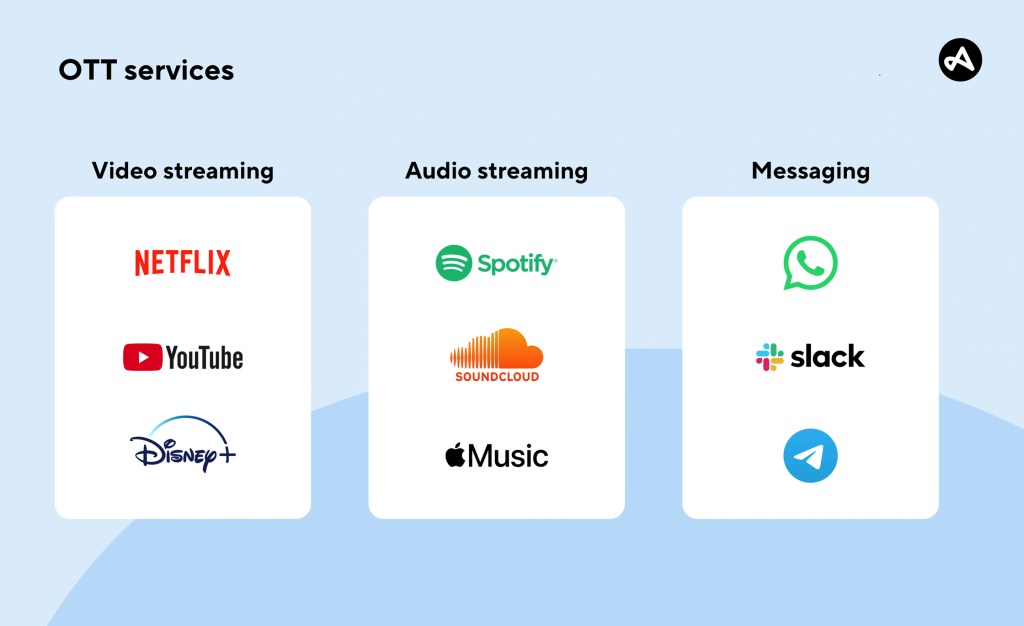
OTT services are split up of 3 types: Video streaming, audio streaming, and messaging. Video streaming contains apps like Netflix, YouTube, Disney+, Amazon Prime Video, HBO Max, Roku, Apple TV, and Hulu. Audio streaming consists of Spotify, Apple Music, and SoundCloud. Messaging consists of apps like WhatsApp, Telegram, Slack, and Signal. The best way most people to pick the OTT service for you is utilize free trials. OTT streaming platforms are more popular than ever because it gives so much control to viewers and broadcasters. Streaming on smart TVs and CTVs is on the rise as more viewers cut the cable cord and opt for top online streaming companies. Speaking of cord-cutting, that is when households cancel their subscription to cable or satellite TV, which drives more consumers to stream video through connected TV. In addition to cord-cutters, there are also “cord shavers,” who are minimizing their pay-tv plans but still using streaming services. And then there’s a growing number of “cord-nevers” which are people who have never paid for TV subscriptions or premium channels. The OTT marketing companies’ industry is projected to be worth $1.39 trillion by 2027, which is no surprise, given that as of June 2024, there were about 4 billion OTT video users worldwide.
There are 4 types of OTT videos:
SVOD – Subscription Video on Demand. This is the most common OTT service where users pay a monthly or yearly subscription to watch content. Ex. Netflix and Disney+
AVOD – Advertising Video on Demand. This is content delivered either free or a lower price alongside advertising. Ex. Pluto TV and Peacock
TVOD – Transactional Video On Demand. This is essentially pay-per-view, which is used commonly for movies or live sporting events.
FAST – Free Advertising Supported Television. Advertising driven, scheduled linear TV channels created from existing on-demand content catalogues.
OTT advertising, also known as Targeted Advertising, is a technology that allows OTT providers to show viewers different ads based on their personal interests. These can include many different things, such as viewer’s age, where they live, what sort of TV shows they like to watch, and more. Most of this data is either given when signing up for a service or deduced from viewing patterns. The technology allows the OTT service to show different adverts in the same time slot to different viewers, as well as run nontraditional ads such as those embedded in the UI of the service, pop-ups, and more. As we move into a content focused society, OTT content is only going to get better.
 Nick Andrews | AstraVision Media
Leave a comment